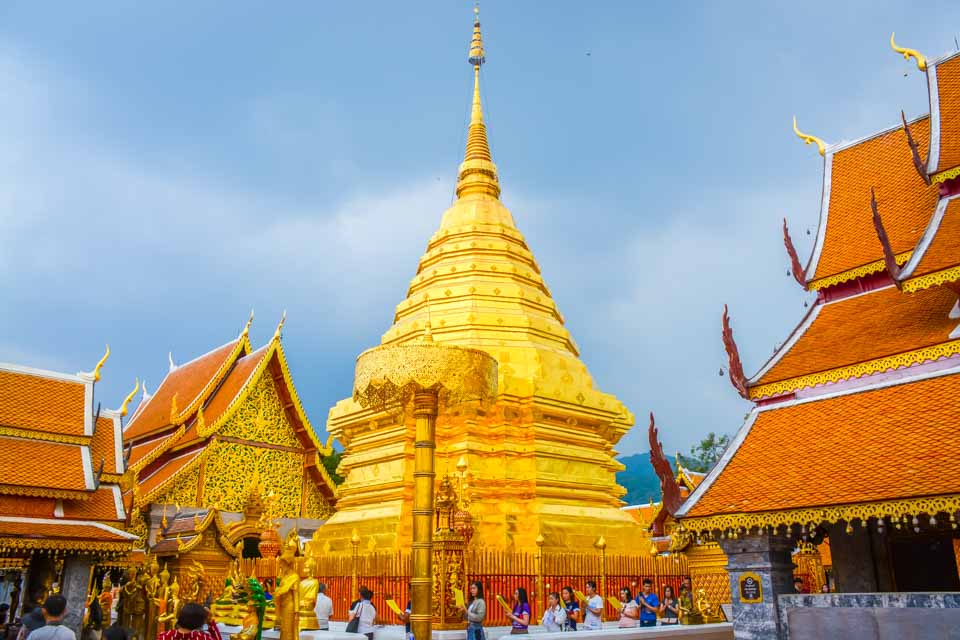
Play
Prev
Next

For many people, the name Macau is synonymous with one thing only: gambling. Referred to as the Las Vegas of the East, Macau has actually overtaken its American counterpart in terms of revenue and size. Prosperous Chinese mainlanders cross the border via bus; the wealthy from Hong Kong utilize the speedy ferries (and even helicopters!) to arrive at its shores. And with the biggest and best names like the Venetian, Wynn, and MGM, it’s no wonder why dollar signs dominate visitor’s minds.

Of course, there’s actually much more to Macau than high-end casinos and high-rolling gamers. Macau is also a former Portuguese colony, its original development to provide a trading port between China and Europe. It doesn’t take long to feel the Mediterranean influences that still permeate the peninsula’s streets as a result; in fact, it’s quite fascinating to experience the blending of Portuguese and Chinese cultures, jointly integrated into Macau’s street signs, food, and architecture.

Perhaps the most obvious place to observe the confluence of East and West is via a stroll through Macau’s Historic Center.

 Ruins of St Paul's and Pastel Houses Macau


A World Heritage Site, it is at times seething with tourists; however, visitors stroll through the celebrated streets for good reason. A walk through the area will reveal pastel-colored houses, cobblestone walkways, Chinese temples and Moorish barracks—just a few indicators of Macau’s rich cultural past.


 Portuguese Pastel House Macau


As much as we love roulette, spending the day meandering through Macau’s Historic Center was a highlight of our time in the area. Well, that and the inexpensive Portuguese wine! Beginning at the A-Ma Temple and concluding at the Ruins of St. Paul’s, walking through the historic center is relaxing and easy due to the numerous information signs that dot the path.


Here are a few of our favorite stops-and photographs-enjoyed along the way.


A-Ma Temple

Older than the city of Macau itself, the A-Ma Temple consists of numerous smaller pavilions, each dedicated to various deities. Influences from Confucianism, Buddhism, Taoism, and folk beliefs dominate.

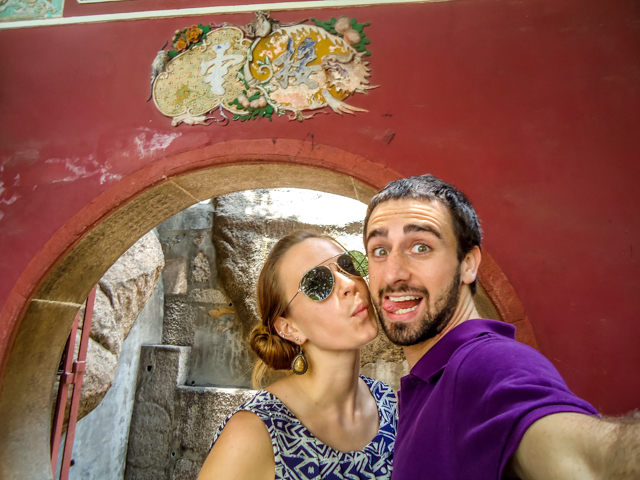
 A Cruising Couple A Ma Temple Macau


Moorish Barracks

The Moorish Barracks are just fascinating to me. Originally designed by an Italian, the barracks were built in neo-classical Mediterranean style with Moorish influences to house Indian police officers under Portuguese rule in Chinese territory. Talk about numerous cultural influences!

 Moorish Barracks Macau


Lilau Square

Home to one of the first Portuguese residential areas in Macau, Lilau Square was also a main source of natural spring water. The World Heritage Guide says there is a popular Portuguese saying: “One who drinks from Lilau never forgets Macau”. Luckily there’s still a water fountain in the square to give the romantic testament a try.

 Lilau Square Macau

Lilau Square Spring Water Macau


St. Augustine’s Church

A lovely church first established by the Spanish Augustinians in 1591. According to the Macau Tourism Board, in times past the church would cover its roof with fan palm leaves. The Chinese attributed these leaves to dragon’s whiskers floating in the wind, resulting in the Chinese name Temple of the Long-whiskered Dragon. Love it.

 St Augustine's Church Macau


St. Dominic’s Church

With original construction completed in 1587, this is the oldest church in Macau. It’s located smack dab in the heart of Senado Square. which means you really can’t miss it.

Dominic's Church

Dominic's Church Interior


Senado Square

A distinct Mediterranean feel emanates from the pastel-colored buildings and blue ceramic tiles so prevalent in Senado Square (despite the Starbucks and McDonalds that share the venue). Numerous picturesque cafes, restaurants, and shops on the alleys extending off the square add to its charm.

 A Cruising Couple Senado Square Macau

Sanado Square and Grand Lisboa Macau


Ruins of St. Paul’s

Originally the church of Mater Dei, the Ruins of St. Paul’s are what is left of its façade. Today it is a symbolic alter to the city of Macau. Although most people will breeze past the details of the ruins, we recommend taking a moment to note the unique Portuguese and Chinese decorations on the structure. For example, you’ll find a pair of lions (similar to those you would find protecting the outside of Chinese temples) and Chinese inscriptions interspersed with the typical biblical scenes of Jesus, as well as the symbolic Christian dove.

Statue and Ruins of St Paul's Macau Ruins of St Paul's Macau


Old City Walls

The Old City Walls are a remnant of the original Portuguese defense walls. Perhaps more notable than the walls themselves are the views they offer of Macau. It’s also a great place to take a water break and make funny faces at the camera.

 View from Old City Walls Macau

A Crusing Couple Macau


These are just a few of the many attractions encountered while strolling through Macau’s Historic Center. As you can see from the pictures, the entire historical area is just bursting with Mediterranean influences. It’s easy to get lost wandering down the cobblestone paths; however, if you’re anything like us you might not have time for much more as you’ll be too busy stuffing your face with all the delicious Portuguese, Macanese, and even French food available. More on that coming soon!


Have you visited Macau’s Historic Center? Did you find it as memorable as we did?

Happy Birthday Buddha

Happy Birthday Buddha!

After a harrowing bus ride, we finally arrived at Tian Tan Buddha–the world’s largest outdoor seated bronze Buddha (with quite possibly the longest name).  We alighted from the bus only to find ourselves immersed in a cloud. Despite being one of the largest Buddhas in the world, we could barely make out its silhouette from the base of the stairs. Finally the clouds drifted away and the buddha became visible, but only to coincide with a million people joining us around the statue. I love the ‘human element’ in photos, but it was getting a bit ridiculous. Until this happened. As I was about to finally capture a photograph without a single sweaty tourist, this monk centered himself in front of me. After chasing after the perfect shot all morning all I had to do was hit the shutter once.

Today also happens to be Buddha’s birthday, making this the absolute perfect shot for Photo Friday.  Hope you enjoy!

Our first visit to Tainan was almost exactly a year ago. We didn’t plan to make exploring the historic streets of Tainan an annual event, but Andrea Bocelli happened to be performing there this past weekend. And because my husband is ahhh-mazing, he surprised me with concert tickets to see the Italian opera singer I’ve been slightly and quite randomly obsessed with since we came to Taiwan. A pretty good birthday present if I do say so myself. I know not everyone is on the Andrea Bocelli bandwagon, but I get goose bumps every time he belts out in that rich, velvety tenor voice of his. And I couldn’t have been more delighted by the concert, even if we had to don ponchos to combat the light drizzle permeating the outdoor venue. Good thing I wore those heels…

Andrea Bocelli Tour Tainan

A Cruising Couple in Ponchos

Tainan is probably one of my favorite cities in Taiwan. I know, I know. If you’ve ever read our blog before, chances are you’ve heard me claim ‘such and such’ to be my favorite spot for something or other. But there really is a special feeling about Tainan. Perhaps it’s because, as the oldest city on the island, Tainan emanates history and tradition. In the exposed redbrick walls that tell tales of Dutch colonialism at Fort Anping; in the ancient temples and shrines that have remained authentic in the face of modernization; in the delicious street foods that tell stories from centuries past—each strand comes together to weave the tapestry that is Tainan, both past and present.

Old Street Tainan Taiwan

Tainan is easily walked, although it might leave you sweating a bit during the hot summer months. Regardless, there’s no denying that walking is the best way to stumble upon the numerous temples and historical remnants that decorate the alleyways. To help you along, here’s our guide to strolling past Tainan’s best attractions:

Walking Guide: Tainan


Chihkan Towers (Fort Provintia)

The Dutch first laid the foundation to this old fort in 1653, although today most of the features have been reconstructed. Kindly enough, the local people no longer call it the Tower of Red-Haired Barbarians, which was so eloquently used to describe it during Dutch occupation. The grounds to the Chihkan Tower are picturesque, and at night the entire premises lights up, providing an ideal backdrop for concerts and music performances. Entrance to the Chihkan Towers is 50NT per person, 8:30 a.m. to 9:30 p.m.

Chihkan Tower Tainan Taiwan

Chihkan Tower Turtles Tainan Taiwan

Chihkan Towers Tainan Taiwan night

Chihkan Tower Statues Tainan Taiwan

Sacrificial Rites Martial Temple

Just across the street from the Chickan Towers, this temple is said to be one of the oldest and best-preserved temples in Taiwan. The God of War, Guandi, is at the center of the Sacrifical Rites Martial Temple, and government officials and businessmen have been flocking to pay him alms since the 1600s.

God Of War Temple Tainan Taiwan


Confucius Temple

Built in the late 1600s, the Confucius Temple was the epicenter of culture and education in Taiwan, and regarded as the highest institute of learning at the time. The grounds are lovely, with elegant banyan trees providing shade for those practicing tai chi (or just observing from the comfort of their bench on the sidelines).

Confucius Temple Tainan Taiwan

bench observer

*Note: Alongside the Confucius Temple you can find the highly popular Lily Fruits Stand serving up Cua Bing, or shaved ice. If you’re willing to wait (which we weren’t), you can have fresh fruit, peanuts, beans, and condensed milk mounted upon a heaping of shaved ice.

Fuzhong Street

Across from the Confucius Temple and through the stone archway is the charming Fuzhong Street. A hub for artists and coffee shops, this is the perfect tree-lined avenue to stroll down while taking a breather from all the temples. It’s quite unique for Taiwan, and reminds me more of the outdoor markets so common in Europe.

Fuzhong St Tainan Taiwan


Old Fort at Anping (Fort Zeelandia)

Another remnant from the Dutch, this fortress provided the Dutch East India Company with an ideal port and sea-defense location in Taiwan. Unfortunately for the Dutch, their small army didn’t last long against the Chinese forces rallied behind Koxinga, and they surrendered in 1662. Since then not too much has been happening at the Old Fort, although it is still a nice place to wander around while learning a bit about Taiwan’s history.

Anping Fort Tainan Taiwan

Anping Fort Tainan Taiwan View


Anping Old Streets

My favorite part about the Old Fort area is the surrounding historical streets. Exposed, crumbling redbrick guides the way, and it’s easy to get lost here retracing the footpaths of the early Dutch settlers. The key is to get off of the vendor-lined Yanping Street and onto the quiet side roads that beckon to be explored.

Exposed Brick Tainan Taiwan


While you’re burning all those calories from walking about, be sure to recharge with a few of the ‘xiaochi’, or small snacks, Tainan is famous for.


Danzi Noodles

Peddler's Noodle Soup Tainan Taiwan

Danzi noodles consist of a sweet and tangy noodle soup, complete with minced pork and a single shrimp. We chose to try the famous dish at the Chihkan Peddler’s Noodles Shop, where the nostalgic décor and historic building make up for the fact that the store has only been operating since 2002. It takes an entire day to adequately prepare the minced pork, but the hard work certainly pays off. These noodles are delectable, and offer a uniquely sweet flavor when compared to other noodle soup dishes readily available in Taiwan.


Coffin Bread (Guancai Ban)

Coffin Bread Tainan Taiwan

Don’t be turned off by the appearance of this dish—it actually tastes quite similar to chicken potpie. Originally a dish of Chinese peasants, this poor man’s food consisted of chicken liver, mixed with vegetables to create chowder that could then be poured into the remnants of stale bread (resembling a stone coffin). Today your chances of finding liver coffin bread are slim to none; chicken, seafood, and pork are the newer, tourist-friendly versions offered up by street vendors.


Oyster Omelete

Oyster Omlete Taiwan

You’ll find this dish all over Taiwan; however, it is said to have originated in Tainan. Egg batter is mixed with small oysters, green onions and potato starch to produce a thick, chewy omelet. Not our favorite dish, but worth a try.

Whether you’re seeking political history, spiritual reverence, or great chows, Tainan has something to offer visitors in a distinctly authentic way. We have put together our  own personalized Tainan walking tour that hits the highlights. Plus, if you’re really lucky, you can time your visit with Burning Boat Festival and watch a 40-meter boat set alight by explosives. Totally awesome.


Have you been to Tainan? Any insider tips to add? Let’s hear them below!


We weren’t expecting to see spiritual warfare when we went to Padangbai. Our main purpose for visiting the small fishing village was actually just to check out the action below the water: reef sharks, manta rays, turtles, and general ocean scenes seemingly taken straight from Finding Nemo. And while we were fortunate to experience the incredible marine life Padangbai boasts (sans manta rays), this wasn’t the most memorable part of our short stay in the town. That’s because this was no typical day on Bali’s east coast; it was the day of the Barong dance ceremony.

Barong Dance Crowd

Padangbai, Bali Villagers

Barong Dance Ceremony

Barong Dance

Now we had already seen numerous Barong dances before arriving in Padangbai, a favorite being in Ubud. So when we heard we would have the opportunity to see another one, we weren’t all that excited. I mean, it has got to be like the Harlem Shake—once you’ve seen one, you’ve pretty much seen them all, right?

Barong

Wrong. Especially when it is a local, religious ceremony; then it’s still an entertaining performance but with a much deeper, spiritual purpose. As it turns out, our previous encounters with Barong had left a crucial element out of the tourist driven performances: exorcism.

But before we get to the juicy stuff, here’s a summary of the story of Barong, according to Balinese mythology. Don’t worry, it’s quick.

Barong dance portrays an epic battle between good and evil, a similar concept in most world religions. Barong, often depicted as a lion, represents ultimate good. In contrast, Rangda is an evil witch, or demon queen, skilled in black magic. Does this not already sound reminiscent of a certain Narnia plot? Unfortunately, after that, it gets a bit more complicated. The Barong appears on the stage, accompanied by monkeys, which are historically associated as helpers of the Barong. (This could be why there are so many monkeys still found at Balinese temples. That or all the free bananas they receive from the tourists…) They dance around happily before the malicious Randga makes her appearance, attempting to cause harm to the Barong, at which point the battle between good and evil begins.

Barong

Barong

Rangda

Rangda

Rangda Attack

This is also the point where things in the audience start to get…well…interesting. Just to reiterate, this wasn’t a performance for tourists. It was an authentic religious ceremony to balance the level of good and evil in the local village, Padangbai. As such, the performance involved personal purification as well. We didn’t really realize that at the time, and it took much clarification from our friendly Balinese bartender later that night to understand what was happening. But as I was saying, this is when the audience really started to get going, and Dan and I simultaneously started distancing ourselves from the crowd. It’s also the point where people started to become possessed by the evil spirit of Rangda. It came on slowly, and of course the first person to feel the ill effects was literally seated one foot away from us. The young man, who appeared to be in his twenties, spontaneously began wildly thrashing around while screaming out in incomprehensible pain. His buddies nearby quickly pinned his arms and legs to the ground as he struggled with what appeared to be pure hysteria. Dan and I had no idea this was coming, and as we dodged to avoid his flaring fists, we were astonished to hear the sounds of laughter in the air. Looking around, we could see local women and children enjoying the scene, apparently not phased by it all. Okay then, nothing to worry about. Maybe it’s just this guy’s charming personality. But as the show continued, more men systematically began to fall prey to the spirit of the Rangda. Before we knew it, the crowd had divided into groups, with the women and children standing about the same place as Dan and I, and the men huddled in circles of ten while attempting to restrain their possessed companion.

Now, all the dancing was still going on at this point in time. But somehow while fearing black eyes from stray fists we got a bit distracted (imagine that happening, eh?) Suddenly the costumed dancers had exited the stage and the ceremony appeared to have ended. The men who were possessed were quietly helped up, a handful of the women and children began to leave, and the few other tourists present could be heard chattering about what possibly could have been going on. We were just about to make our exit when we noticed a couple lines forming. It wasn’t long before we also realized bundles of sticks were being set ablaze and a new crowd had formed, circling around the priest holding the glowing branches. It was time for the actual exorcism to take place! The spirit of Randga was still very present in the possessed men, and craziness seemed to ensue. Holy men from the temple, with their heads wrapped in white and their bodies covered in sarongs methodically began forcing arak, the local liquor, into the mouths of the distraught men. This seemed to only make their case worse as now they were obsessed with the nearby flames. Their fellow villagers finally let them loose to run towards the fire where other holy men were waiting to beat them with the torch, although apparently taking care to hit them on places that would do no serious harm. The fire then appeared analogous to the evil spirits, for after the first was extinguished, the second followed suit. One by one the spirit of Rangda was exorcised, and the balance between good and evil was restored. The exorcised men collapsed quietly to the ground, understandably exhausted from the spiritual war that had taken place inside them.

We were quite taken back by this ceremony, and unsure what to make of the events that had transpired. Specifically, we couldn’t be certain as to whether those who had been overcome by evil spirits were just acting. Had they previously decided to become ‘possessed’? It seemed a bit odd that those who did feel the effects were spaced so evenly across the crowd, with a group of friends nearby to respond to their frenzy immediately. Or did they just know that they would feel Rangda because of some bad occurrence in their life that needed to be sorted out? Over our own glasses of arak later that night, we spent a long time talking to our Balinese bartender about the ceremony, asking him these very questions. While he was able to clarify a little, he also couldn’t be certain. However, he did emphasize that it wasn’t a joke or an act. Perhaps those who became possessed did know it would happen prior to the Barong dance. Or maybe not. But this question didn’t seem of importance to him, or any of the other locals we asked—quite a contrast to Western culture. Ultimately, it seems left to believe what you would like about the performance and the evil spirits present.


Have you seen a Barong dance that included the exorcism ceremony? Any similar experiences? We would really love more knowledge about the events we witnessed.

We were sitting at breakfast in the middle of who-knows-where-Java, drenched to the bone and devouring our glamorous breakfast of plain toast and Nescafe after a failed attempt at climbing Mt. Bromo.  (Well, in all fairness, we succeeded in waking up at 4am and climbing to the viewpoint to see the sunrise. It was the constant downpour—aka lack of seeing anything—that constituted as failure.) A couple of minutes into our breakfast of champions, a retro British gal (also returning from the not so epic Bromo quest) asked to join us as she awaited her next transport. Our conversation soon arrived at the generic, travelers meeting other travelers questionnaire, somewhat reminiscent of freshman year of college. After covering the basics of “Where are you from?”, “How long are you here?” and “Is this going to be a long term, clingy friendship kind-of thing? Cuz I can’t tell if you’re annoying quite yet.”, our chatting soon turned to Ubud. Our new friend had just spent a month practicing yoga there, and I was intrigued to find out if it lived up to all the hype it receives. After all, I kept hearing Ubud was supposedly the one place I just had to visit while in Bali. Like finding out your favorite male celebrity is actually only attracted to other men, her description more than turned me off:

“Well, actually, it’s quite Eat, Pray, Love at the moment. A lot of middle aged American women soul searching and practicing bunny yoga. But I still loved it. Everyone does.”

Ughhhhhhh. I inwardly groaned for about five minutes, thinking back to how much I didn’t like the book Eat, Pray, Love. And then I spent about twenty minutes thinking about what bunny yoga might be, and how I probably fit the description to a tee. Don’t get me wrong. I was still excited to see the cultural heart of Bali, nestled amongst jungle and rice terraces. And there must be a reason why artists have been flocking to Ubud from around the world for nearly half a century.  I guess I just wasn’t really expecting to be blown away by it anymore.

But of course, it’s always the ones you don’t expect that leave the most memorable impression. I immediately fell in love with Ubud, and before we had even departed I was conspiring all the ways in which we could return to the city for a longer period of time.

I don’t know why I felt such a connection with Ubud. I just did. And although I’m not the first or even five hundredth person to comment on the spiritual, rejuvenating effect the city can have, it’s still there.  In the beautiful serenity of the rice terraces and Balinese countryside. In the practice of traditional dance and the fine arts. In the quaint stone pavements that guide your feet past lush gardens and temple walls.

And while yes, you can buy Eat, Pray, Love trinkets in the souvenir shops and network with expats at expensive yoga classes, it remains an inspiring and beautiful Mecca that just kind of naturally leads to self reflection. One that I’m hoping we’ll return to very soon.

View from our Homestay apartment, Ubud, Bali

View from our Homestay apartment.

Homestay Sunset, Ubud, Bali

Homestay Sunset

Holy Spring Water Temple, Ubud, Bali

Holy Spring Water Temple

Holy Water Blessings, Ubud, Bali

Holy Water Blessings

Ubud Tourist Village, Bali

Ubud Village Children

Statue Offerings Ubud, Bali

Statue Offerings

street Ubud, Bali

Forest Path, Ubud, Bali

Strolling With Our Host

Strolling With Our Host

The Rise of the Apes, Monkey Forest, Ubud, Bali

Rise of the Apes

Barong Dance in Ubud, Bali

Barong Dance

Balinese Dance, Ubud, Bali

Balinese Dance

Monkey, Ubud, Bali

Enjoy the show.

Enjoy the show.

Legong Dance, Ubud, Bali

Legong Dance

Yoga Barn, Ubud, Bali

Yoga Barn

We Were There, Ubud, Bali A Cruising Couple

We were there!!!

Mount Batur, Ubud, Bali

Mount Batur

Feb 092013

We had heard the warnings. Fellow travelers felt personally responsible to inform us that Kuta was now the remnants of a past paradise, transformed into an overrun tourist town where too many high-priced souvenirs and western restaurants (think Hard Rock Café and Wendys) now dominate the landscape. We heeded their kind advice, and chose to stay at the amazing Puri Bambu hotel in Jimbaran Bay. But you know how it is. If you’re told not to play with fire, the first thing you do is try to turn bacon into a welding torch. So obviously we set off to Kuta on our first day in Bali, just to see if it lived up to our expectations.

The first thing we noticed was that there were about 10x more foreigners than locals. And the second thing? The Hard Rock Café.

Determined to understand why so many tourists came to a city that appeared like it could be any other city anywhere else in the world, we headed to the beach. Of course this would explain the obsession some have with Kuta! Unfortunately, we were met with a disappointing reality. The beach was filled with trash, and a sewer smell pervaded the area. Mamas, as they called themselves, roamed like hawks, and it didn’t take long for me to become their prey. Normally I’m pretty good at resisting when locals try to sell me overpriced services and goods. This time, I managed to leave Kuta beach with a manicure and pedicure, and I’m still not exactly sure how it happened.

Kuta Beach

Mama Loco, Kuta

In all fairness to Kuta, Dan did have a good time on a surfboard. But that was after he got over the fact that plastic garbage bags kept plastering themselves to his legs.

All that being said, Kuta makes sense if you want to pay lots of money to party all night and then nurse your hangover in your expensive resort the next day. Or maybe if you are looking for expensive shopping and fancy restaurants with an okay beach nearby. If that’s not you, than heed our advice—get out of Kuta as quickly as possible. Then check out some of the nearby places below.


The Bukit Peninsula

This was our favorite area of western Bali. White sandy beaches and turquoise water, good waves, not much traffic, just the right amount of development to have places to eat…what’s not to love? Broken down a little farther, here were some of our favorite spots:


Bingin Beach

This small alcove is the perfect spot to relax with a Bintang in hand while checking out the waves before a surf session. There are only a couple of warungs to eat at—we recommend the wraps at Kellys. Boards can be rented here for around 50,000 Rp ($5).

Offerings At Bingin, Bali

Pretty Casey, Bali A Cruising Couple

Padang Padang

A little bit bigger than Bingin Beach, and maybe a little bit more picturesque, Padang Padang is a great white sandy beach with good waves. It’s also your gateway to surfing the famed Incredibles. It’s not as private as Bingin Beach, but this also means more entertainment. If you need a break from the sun, there are a lot of great restaurants on the main road. Don’t miss the Mexican fare at Sunset Grill—YUM.

Padang Padang

Jam Sesh

Uluwatu

The surf here is a little more intense, and the beaches not as accessible, but the monkeys sure are awesome. The Uluwatu Temple is located on a cliff, and easy to access via scooter. It is definitely worth the trek for the stunning views, and of course, the monkeys are an added bonus.

Uluwatu

If you want to stay a little bit closer to Kuta for the conveniences the city offers, we recommend either Seminyak or Jimbaran Bay.


Seminyak is a little to the north, and is known as the ritzy, Ibiza-ish area. It’s definitely still expensive, but with lots of cute boutiques and great restaurants. The beach here is also much nicer than Kuta as it seems the expensive resorts here take the time to groom it.

Seminyak

Seminyak Beach

Jimbaran Bay (to the south of Kuta) is where we stayed, and while the beach here isn’t really the best during the day, it comes alive at night. After watching a famous sunset, be sure to grab a romantic, candlelit table on the beach. All the restaurants offer fresh seafood dinners with the waves crashing at your feet. Don’t be shy to ‘negotiate’ your dinner price; apparently it’s normal to offer a discount.

Jimbaran Bay

As you can see, there are LOTS of options only about an hour outside of Kuta. And that’s only western Bali :-) We’ve also heard good things about Lovina and Sanur, although we haven’t been there ourselves. 

Buddha

This is Borobudur. Perhaps you’ve heard of it. More than likely you haven’t. We definitely had no idea what the word Borobudur meant before beginning all of our Indonesia Google-searches. Now we can tell you the name translates into something like ‘temple above the hill’. But that’s not really all that important because, I mean, just look at it. It’s magnificent.

borobudur, A Cruising Couple

Borobudur is the largest Buddhist temple in the world, built around the 9th century. The structure of the temple is that of a stupa, which in Buddhist beliefs is meant to replicate the universe. It is further broken down into three sections, Kamadhatu, Rupadhatu, and Arupadhatu. According to Buddhism, these three levels represent humans controlled by desire, humans able to control desire but bound by forms, and finally a state of nirvana.

The temple is beautiful from the outside, but we found it to be best admired from its peak, especially amongst the stupas on the top level.  I guess Nirvana is the place to be after all.

Storytelling at Borobudur

Stupas, Borobudur

Buddhas, Borobudur

If you visit Borobudur and Prambanan, you might be approached by a group of Indonesian students studying English. They’ll ask you a few questions about where you’re from and what you are doing at the temple, and maybe if you’re lucky they’ll also invite you to sit down to continue chatting so they can practice their English. If this happens, I highly recommend taking a few minutes to get to know them. After answering typical questions about American universities and Hollywood, we learned all sorts of interesting things about Indonesian culture. For example, did you know that at clubs and discos, Indonesians won’t dance with their hands in the air (you know, the ‘raise the roof’ motion); rather, they’ll move their thumbs in circles. That’s right, just their thumbs. And they love to talk about music. One of the girls gave us a quick excerpt of a traditional Balinese song, which was followed by the whole group belting out the lyrics to the Indonesian pop song ‘The Music of My Country’. As a thank you gift for taking the time to stop and talk, a few girls gifted me with key chains and flowers—a gift that was greatly appreciated even if not necessary. Borobudur is remarkable on its own, but meeting these young people really added to the experience.

A Cruising Couple New Friends, Borobudur

 Now that you’ve met Borobudur, let me introduce you to Prambanan. Slightly less famous than Borobudur but equally incredible in its own right.

A Cruising Couple, Tree pose, Prambanan

The busy folks of the 9th century also built Prambanan, a Hindu temple that can be broken down into three smaller temples on the main complex. The two on the left and right are dedicated to Brahma, the god of creation, and Vishnu, the god of protection. The largest and most impressive building in the center is dedicated to Shiva, the god of desire. After a devastating earthquake in he 16th century, much of Prambanan had to be restored and rebuilt; however, World Heritage and the Indonesian government appear to have done a remarkable job, even marking every replacement stone with a small nail.

Prambanan

Prambanan up close

In contrast to Borobudur, we found Prambanan more exquisite from afar, where the scale of the temple could better be appreciated. Dan really likes taking pictures with people in it, hence my many  ‘gazing off into the distance’ poses. (There are about 20 that didn’t make it to the blog). I didn’t really complain though since the view was pretty good.

Old Prambanan

A Cruising Couple, Grand Scale, Prambanan

We strongly recommend seeing both Borobudur and Prambanan. Despite being large ancient temples merely an hour away from each other, they are remarkably different. They also provide a glimpse into the past of the island of Java, when Buddhism and Hinduism were the prominent religions (as opposed to Islam today). Most people base themselves in Yogyakarta to see the temples. We rented a scooter from here for about $5 for the day. If you are comfortable and familiar with driving on a scooter in chaotic traffic (Taiwan qualifies you), this is the way to go. It offers the flexibility of quickly going to and from the temples at your own pace and an affordable price. Driving should be taken seriously though, and we wouldn’t really suggest getting on a scooter in Indonesian traffic if this is your first rodeo. Tours are easily booked from Yogyakarta for reasonable prices, and of course there is also the bus line.

Additional temple found on the Prambanan grounds

Additional temple found on the Prambanan grounds

Entrance to the temples: $18 each; $9 if you have a student ID

Time via scooter (or car) from Yogyakarta: 1-1 ½ hours to Borobodur; 45 minutes to Prambanan

World Heritage sure has a good head on its shoulders for assisting in the maintenance and organization of Borobudur and Prambanan(despite the actual missing heads you might see).

Don't Lose Your Head, Borobudur

Sometimes it gets a bit easy to forget that we are expats, living halfway across the world from “the peak of good living” (otherwise known as Apex, N.C.). People always seem surprised when I say that, probably assuming that the whole not-speaking-Chinese thing might remind us we are in Asia oh… say… every time we try to do anything. I mean, we realize one year abroad doesn’t turn you into a local; it’s just that we have a pretty good grasp on where we live. We (i.e. Dan) know how to get to the places we want to go without getting lost. We know where the best restaurants/cafes/bars are, and what to order at said places.  We know how to run 16-miles through breathtaking farmland and mountainous panoramas without going too far out of the city.  And driving on my scooter to go teach the most adorable kindergarten kids in the world, all the while knowing I will most likely come into contact with glitter, has become my temporary life. But then, something happens like a boat burning festival, and it puts everything back into perspective. We remember we are actually living in a country very different from America with unique cultural practices and beliefs.

Specifically, it’s a country with the Wang Yeh Boat Burning Festival.

To understand why a 14-meter wooden ship is constructed for the sole purpose of burning, a little bit of information about the Wang Yeh is helpful. According to our understanding, the Wang Yeh are folk deities worshipped in Southern Taiwan. They are believed to be supernatural beings that eradicate plagues and demons, bringing in their place peace and prosperity. The boat burning is essentially a medium to assist in the plague elimination. Once every three years, a wooden ship is constructed and after 8 days of celebration, it is paraded around the city of Donggang where it collects the sicknesses and ill fortune of the people. After being stocked with food and necessities for the spiritual journey, it is propped upon a giant mound of ghost money on the beach. A couple hours of traditional rituals later, the boat is set on fire via military grade firecrackers, forcing bad spirits out of the town and leaving peace in its place.

We knew we had to experience this ritual while we could, seeing as how it only occurs once every three years. After a 4-hour train ride followed by a 45-minute taxi lift, we arrived at the event location. The entire city was abuzz with food stalls, vendors, lanterns, fireworks, Chinese plays, and of course, ‘Taiwanese burritos’. A sneak-peek of the ship could be had at the town’s central temple, dedicated in part to the Wang Yeh. After a quick stop and photo-shoot that mostly consisted of loosing our party, we made our way to the beach to stake out our seats for the boat burning. In all honesty, we were a bit ambitious, and we didn’t even end up staying in our coveted ‘seats’ upon a fitted sheet in the sand; however, we did make about 30 Taiwanese friends, all of whom were interested in learning the rules to a card game called “Bang!”.

Boat For Boat Burning Festival

Boat Burning Festival at the Temple

Boat Burning Festival Boat

Crab at Boat Burning Festival

A Cruising Couple Friends at Boat Burning Festival

A Cruising Couple Stoked at Boat Burning Festival

Finally, after hours of waiting, the ship was brought to the beach around 2:30am.

Trolly at Boat Burning Festival

Nap Time at Boat Burning Festival

Boat on Beach at Boat Burning Festival

At this point, we, along with everyone else, were quite tired and ready to get this bonfire roaring. Little did we know there would still be another 3 hours of boat building and preparation before the first firecracker ignited. The masts were ceremoniously lifted, the flutes were played and the offerings were loaded, but we couldn’t help but doze off in what had become our humble 2-square-foot territory. Finally around 5am, the crowd started to stir and you could tell IT WAS TIME. After the anchors were lifted from the already grounded ship the big finale erupted, quite literally. In explosions of heat and light the boat and everything on it was sent skyward.

Mast Raising at Boat Burning Festival

Second Mast at Boat Burning Festival

Third Mast at Boat Burning Festival

Sails at Boat Burning Festival

Raise the Anchors at Boat Burning Festival

Burning at Boat Burning Festival

Up In Flames at Boat Burning Festival

Crowd at Boat Burning Festival

Burning Boat at Boat Burning Festival

We were surprised to hear mixed reviews from fellow foreigners that it may not be worth the long hours to witness this religious ceremony. Our conclusion: it is definitely a unique and cultural experience. Just remember, good things come to those who wait…. and wait… and wait.

A Cruising Couple at Boat Burning Festival

Aug 252012

© 2013 A Cruising Couple Google Header design by Canary Design Suffusion theme by Sayontan Sinha
  • RSS
  • Facebook
  • Twitter
  • Flickr
  • Pinterest