Play
Prev
Next

Dan always makes fun of me for being impatient. He claims that when it comes to technology and bad drivers and tour groups, I have a short fuse. Of course he’s right. But come on, is there anything more annoying than getting stuck behind a group of twenty-something people, all looking dazed and confused, taking up the entire walkway, completely immune to their surroundings except the guide with the flag leading them on? While you’re stuck behind them, forced to take on their snail-like pace, stopped from quickly arriving at your destination? This seriously seems to happen to us all the time in Asia. And yes, I suppose my quick annoyance with it is a sign of my impatience. (As is my frustration with a slow Wi-Fi connection….)

Because I don’t like to wait around for other people, it is very rare to find us on any sort of tour ourselves. We prefer to travel at our own pace. In addition, we often find tours to be mundane and peripheral, not diving into a place’s authenticity or character. And I just hate if I am on a tour and the guide brings me to his buddy’s souvenir shop.

But if you can create a tour that doesn’t feel commercialized and touristy, that actually offers in-depth information you never would have had access to otherwise, then you’ve struck gold.  And we get really excited.

A Cruising Couple excited Hong Kong Foodie


Hong Kong Foodie Tours is exactly the latter: an in-depth tasting tour that introduces the unique and authentic flavors of Hong Kong to participants from around the world.


When we heard about Hong Kong Foodie’s new tour through the Sham Shui Po district, we just knew we had to include it on our itinerary.

Sham Shui Po, a working-class neighborhood in Kowloon, has escaped much of the reclamation and redevelopment so common elsewhere in Hong Kong. While a handful of tourists might make the trek out here for the clothing or electronics markets, only the locals know that it is a foodie’s dream come true—an enclave for good eats and genuine Cantonese cuisine, with the perfect serving of history, architecture, and culture on the side.

Upon tour day, we met our guides, Cecilia and Silvana, bright and early.  We were immediately struck by their cordial and relaxed dispositions, setting a friendly tone that would continue for the duration of the four-hour tour.

With big appetites in stow, it was time to begin our tasting.


Our first stop was a small and crowded Hong Kong style café for some pineapple buns and milk tea. Pineapple buns derive their name from the checkered appearance on top of the bread, resembling that of a pineapple’s skin; however, no actual pineapple is contained in the recipe. The bread is soft and fluffy, but it’s the crispy sweet topping that steals the show. It’s no wonder the restaurant makes over 300 pineapple buns daily. Of course, no pineapple bun is complete without a cup of milk tea. Influenced from British colonial rule, Hong Kong style milk tea is smooth and rich, a mixture of black tea and evaporated milk (preferably Black and White). The flavor is strong, and surprisingly different from the popular milk tea drinks in Taiwan.


Pineapple Bun Hong Kong Foodie

Morning Tea Hong Kong Foodie


After filling up (perhaps a bit too much) on breakfast, we continued on for some Put Chai Pudding. The gelatinous treat gets its name from the small clay bowls used to mold it, and consists of yellow sugar and red beans. Although normally I’m not into mixing savory and sweet—a practice the Chinese love—I was actually quite a fan of these small chewy snacks. We were taught the correct way to stab the pudding with our sticks, although admittedly I struggled to make pudding-to-mouth contact on multiple occasions.  To complement the Put Chai, we also tried a Sesame Pudding. The texture was similar to the Put Chai, although the taste was less sweet. Wisely we enjoyed a few bites before deciding to save the rest, and our appetites.


Put Chai Pudding Hong Kong Foodie

A Cruising Couple Put Chai Pudding Hong Kong Foodie


Walking in the heat had us sporting beads of sweat, but luckily the next stop was a thirst-quencher: soybean milk. Although we’ve tried soybean milk before, this was the first time we could sip on the slightly bitter beverage while watching the process behind it. The friendly manager eagerly invited us to the back of his store to explain the process of grinding and boiling the beans down to milk, and insured us that only Canadian organic soybeans are used.  Honestly I was more impressed that he operates his store from 6am to midnight each day.

Soybean Milk Shop Hong Kong Foodie

Soybean Milk Hong Kong Foodie


At this point we had walked our way from breakfast to lunch; it was now time to sample some braised goose and pork knuckles. It takes the small restaurant two hours to properly prepare the goose, but the results are sublime. The meat was juicy and tender, the sauce unlike anything we had tasted before. This was our first time to try pork knuckles, and while initially the name turned us off a bit, we were surprised to find we quite enjoyed the taste. The pig knuckles were served cold, the goose hot, and both with a classic side of white rice. Our stomachs were filling and our appetites dwindling, but we couldn’t help but keep at the delicious grub before us. That was, until our guides mentioned cookies. Then we suddenly found the will power to pull ourselves away.

 Pork Knuckles and Broiled Goose Hong Kong Foodie


Our following destination has been in operation since the 1940’s; previously a full-fledged restaurant, now it remains as a cookie shop. Boxes of sweets lined the perimeter, including exotic flavors such as red bean and lotus. We sampled the traditional walnut and almond cookies. Light, powdery, and not too sweet, they crumbled in our mouths upon the first bite. While delicious, the cookies ended up taking a sideline to the staff when a lovely old woman, perhaps in her 80s, took it upon herself to teach Dan a bit more about photography. Apparently she wasn’t pleased with Dan’s photos of her co-worker, and explained a bit in Cantonese how Dan should in fact be taking photographs. I’m not sure she has ever held a camera in her hands, but no matter. She was adorable and opinionated and we loved it.

 Cookie Shop Hong Kong Foodie


The final stop on our tasting spree was now just a few steps away.  High expectations set in as we scanned the photos of celebrities who had eaten at the small, family-run establishment. This eatery has also been around since the 1940s, and it is now owned and operated by the founder’s third generation. It truly doesn’t get more family oriented than here. The mother can be found in the shop, where she sets up camp to make the restaurant’s dumplings. The father stays at home to make the noodles, where he sits on a bamboo stick and uses his body weight to rhythmically bounce the stick back and forth across the dough, kneading up to 50 kilograms of egg noodles a day. This is one of the last noodle shops in Hong Kong that uses such a technique, and the end result is a light and bouncy noodle. We finished off our feast with the egg noodles covered in dusty and fragrant shrimp roe. Another dish I would never have ordered on my own, but I’m so glad to have tried.

 Egg Noodle with Shrimp Roe Hong Kong Foodie


I think I might have gained ten pounds visiting those six establishments; needless to say, the food was phenomenal. But it wasn’t just the delectable cuisine at small, family run establishments, holes-in the wall we would never have noticed, that made our Hong Kong Foodie Tour so memorable.


What turned a flavorful morning into an enlightening experience were the conversations we shared with our guides, Cecilia and Silvana.


Along the way, the lovely ladies told us about Sham Shui Po’s history. How it used to be a pier, which is why the name translates to ‘Deep Water Pier’. About the impact that factories had on the community, hence the proliferation of button, zipper and ribbon stores. We learned about mahjong and pawnshops and Hong Kong’s number one street-food, egg waffles. And as if that wasn’t enough, Cecilia and Silvana walked us through markets, explaining to us the variety of noodles, dried fish and even remote controls on display; imparting information only a local would know.

 Pawn Shop Hong Kong Foodie

Knife Shop Owners Hong Kong Foodie


We learned more about Hong Kong’s culture in those four hours than we did the rest of our trip.


Hong Kong Foodie Tour


Believe it or not, there’s still more: Cecilia and Silvana were more than tour guides—they related to us on a personal level. In between talking about food, culture and history, we also chatted about traveling, running and being expats in Taiwan. They resonated with us, and from beginning to end, we never felt like we were part of an organized tour; rather, we continually thought of our guides as extremely knowledgeable friends, showing off their favorite spots in the city.


We highly recommend participating in one of Hong Kong Foodie’s tasting tours upon your next visit to Hong Kong. The tours last about three hours and 45 minutes, and cost HK$690 per person, including tastings. To book contact Hong Kong Foodie Tours (00 852 2850 5006; www.hongkongfoodietours.com) or check out their facebook page.

Have you tried any of these Hong Kong specialties? What was your most memorable or favorite food abroad?


A huge thanks to Hong Kong Foodie Tours for having us on their tasting tour. As always, all thoughts and opinions remain our own.


It’s no secret that Hong Kong has one of the most beautiful skylines in the world.

Still, I didn’t expect to be wowed by it quite like I was.

Victoria Harbor Sunset Hong Kong Skyline

Towering skyscrapers, their reflection shimmering on Victoria Harbor, appeared to engulf us on all sides. By day the lofty buildings were a reminder of how many people cram into Hong Kong’s dense living spaces. By night the cosmopolitan city came alive, and its sparkling silhouette provided the most romantic of backgrounds for an evening stroll—a perfect way to celebrate our two year anniversary.

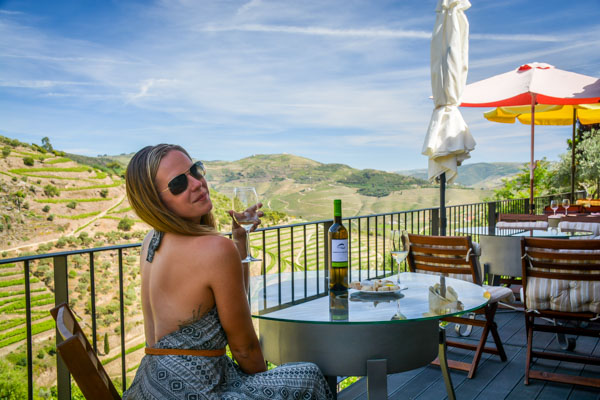
While exploring, we found ourselves stopping in our tracks again and again in an effort to absorb just a little more of the man-made beauty surrounding us. Each vantage point offered a different perspective of the city, mixing old and new, history and progress. Add to that the boats slowly cruising by or the majestic Peak providing a natural contrast to the concrete, and it’s no wonder we were happy to spend hours wandering, cruising, hiking and dining with the view. Of course, taking it all in over a bottle of wine was also a must.

Wine and Cheese Victoria Harbor Hong Kong Skyline

With such an inspiring backdrop, we just had to take about 1000 pictures along the way. (By we I mean Dan. I probably took a whopping three.) We tried to narrow down the photos to include only our favorites, but still ended up with 29 photos. Don’t worry-we then went through one more time to put together the best of the best.

You’ll notice that the photos we chose are not exclusive to Hong Kong’s signature skyline viewed from the harbor on Kowloon (although those are certainly included). Rather, we chose to include our pick of images that display multiple perspectives of the cityscape. Even better, each vantage point can be enjoyed in unique ways.

So here you have it. Our six favorite places to photograph Hong Kong’s skyline.


International Commerce Center

Home to the tallest observation deck –Sky 100– in Hong Kong, the ICC offers breathtaking views of Hong Kong Island and Kowloon Peninsula.  We chose to skip Sky 100 and headed straight for the luxurious restaurants on the 102nd floor. If you happen to be with friends who are inquiring about it for a potential wedding venue *cough-us-cough* you can avoid the high prices on the menu. Alternatively, tea time offers a good value for the location.

Restaurant ICC View Hong Kong Skyline

ICC Victoria Harbor Hong Kong Skyline

International Finance Center

Located on the waterfront of Hong Kong Island, visiting the IFC provides stunning views of Kowloon. Head to the fourth floor-here you’ll find an outdoor area open to the public. For free. Adjacent to the ridiculously priced bar with not-as-good-views. Score. Remember to bring a bottle of wine and watch as day turns to night. Conveniently there is a CitySuper located in the basement. *Note: There is a bit of construction going on in front of the IFC. The better views are actually obtained by sitting farther back. Hopefully they aren’t building an obstruction to this view…

Public Seating IFC Victoria Harbor Hong Kong Skyline

West Kowloon Promenade

Once home to a dockyard, this area is now a popular spot for runners. From here you can see more of the western side of Hong Kong Island’s renowned skyline. Even better, no one comes here, so enjoy the view without flocks of tourists. If we had the time we definitely would have returned here for an evening jog. You just don’t get this kinda view in Hsinchu.

Victoria Harbor West Kowloon Promenade Hong Kong skyline

West Kowloon Promenade Hong Kong Skyline

Avenue of Stars

Located in Tsim Sha Tsui, this is Hong Kong’s version of the Hollywood Walk of Fame. While you may or may not have an interest in Asian celebrities, the promenade still warrants a walk for its location alongside Victoria Harbor, leading up to the Ferry Terminal. Upon the end of the strip you’ll come to the observation deck for viewing Hong Kong’s nightly light show, A Symphony of Lights. It’s quite amazing how the entire skyline lights up in accordance to the song of the night; however, it is a brief show for the crowds it draws. Get there early to make sure you grab a spot up front.

A Cruising Couple Tsim Sha Tsui Victoria Harbor Hong Kong Skyline

Symphony of the Stars Tsim Sha Tsui Victoria Harbor Hong Kong Skyline

Star Ferry

The Star Ferry is an iconic Hong Kong tourist attraction, but also a mode of public transportation for millions of passengers crossing Victoria Harbor every year. Riding the Star Ferry is as inexpensive as it gets (HK $3.00) and provides a unique perspective of both Hong Kong Island and Kowloon.  Operating since 1888, riding the Star Ferry also offers a distinctly historical and cultural experience.

Star Ferry Sunset Victoria Harbor Hong Kong Skyline

A Cruising Couple Victoria Harbor Star Ferry Hong Kong Skyline

Victoria Peak

Unfortunately we choose to summit Victoria Peak on the foggiest day we had in Hong Kong. Ordinarily the Peak is known for it’s magnificent panorama of Hong Kong, with China stretching off in the distance. Judging from our glimpse within the fog, we’ll believe it. Victoria Peak also has many walking paths, as well as a famous tram shuttling tourists to the top of the Peak.

Victoria Peak Victoria Harbor Hong Kong Skyline

This is just the first of many Hong Kong posts to come. We loved the city so much more than we could have anticipated; it was definitely an amazing spot for our two year anniversary. Of course, now that we’re back, we can’t help but start thinking about year number 3. We’re thinking Thailand, but with these cheap flights to Bangkok I’m not sure we can wait a whole year!

What’s your favorite skyline? Have you been blown away by any cityscapes?

Untitled

White and fluffy purse-sized pups. Bedazzled fingernails, t-shirts and jean pockets. Pigtails and the color pink. The name Candy.

It’s all about the cute, or ‘ke ai’, in Taiwan.

The cute factor is more than just fashion though; it extends into just about every realm of life, including restaurants.

You mean food can be cute? Absolutely—although it’s not really the food as much as the general ambience that is essential. We’re talking theme restaurants here, and Taipei is home to some of the cutest ones around. Whether you prefer a tutu or toilet, Taipei’s got the eateries you need.

Hello Kitty Sweets

Hello Kitty Theme Restaurants Taipei Taiwan

In a country that operates Eva Air’s signature Hello Kitty themed airplane, it’s only natural you’re going to find a Hello Kitty themed restaurant too. Hello Kitty Sweets was much smaller then we initially expected, and we found the décor to be surprisingly tolerable. A massive Hello Kitty face decorates the exterior, while the inside is decorated in baby shades of white and pink, chandeliers, and kitty cuteness everywhere. Oh, and bows, bows, bows! We half expected the waitresses to sport cat ears, but sadly their costume called a quits after the pink ruffled skirts.

Hello Kitty Theme Restaurants Cakes Taipei Taiwan

It can be quite pricy to eat in the restaurant; expect to pay for the Hello Kitty food design, not the food quality itself. We chose to sample a small desert, which was surprisingly good and still came with Hello Kitty’s face molded into chocolate form.

A Cruising Couple Hello Kitty Theme Restaurants Taipei Taiwan

Hello Kitty Theme Restaurants Cake Taipei

Location: Address: 90, Da-an Rd Sec 1, Taipei City

Phone Number: (02) 2711-1132


Barbie Café

Barbie Cafe Theme Restaurants Sign Taipei Taiwan

I loved my Barbies just as much as any other little girl. My collection included a three story Barbie house and the entire cast to the Wizard of Oz. But even for me, this restaurant is a little bit much. It’s the first Barbie restaurant in the world, and the owners really tried to set the standard high by spending $1.7 million USD on the place. It basically looks like someone vomited pink and magenta on every square inch of the café. Tutus adorn the chairs; Barbie’s face is blown up to cosmic proportions; the waitresses don tiaras while the waiters wear suits. And of course, there’s a life size Barbie box so you get the perfect snapshot.

Barbie Cafe Theme Restaurants Taipei Taiwan

Barbie Cafe Theme Restaurants Chair A Cruising Couple

You would think this would be a little girl’s dream, but it’s actually quite the opposite. We only saw a handful of children, although the place was packed with young men and women obviously out on romantic dates.

As if Barbie didn’t already get harped on enough for promoting unrealistic expectations about body image, this restaurant pushes the limits even farther. The menu was designed by a nutritionist, and lists the calories for each Barbie-themed food choice available. I guess they assume you might lose a bit of your appetite while staring at replicas of Barbie’s non-existent waistline while you eat. Perhaps it’s a good thing we didn’t see too many young girls inside…

We chose to take some pictures, hold back our giggles at the couples gazing into each other’s eyes, and then move on.

Location: Barbie Café, 2F, 128, Section 4, Zhongxiao East Road, Taipei City

Reservation Recommended


A380

A380 Sky Kitchen Theme Restaurants Taipei

Have a seat and prepare for takeoff. This restaurant actually looks quite reminiscent of a plane, although the seats here offer better leg space. Airplane windows, reclining chairs, personal TVs, and waitresses that double for stewardesses all combine to set the scene. Of course Sponge Bob also commands a huge presence, because, I mean, he totally flies… Unfortunately A380 is located on the same floor as the baby section of the Mitsukoshi department store, which means that most of the diners are the same people toting around their newborns in strollers. When we stopped in there were literally more crying babies than adults. Because the one thing everybody loves on a plane is a baby.  

Airplane Theme Restaurants taipei

Location: Song Gao Road, #12, 4th Floor– Shin Kong Mitsukoshi, Taipei City

Phone: (02)2722-6380


Modern Toilet Restaurant

Modern Toilet Theme Restaurants Giant Toilet

What’s more appetizing than swirls of chocolate ice cream in a cone? Why swirls of chocolate ice cream in a toilet, of course! Modern Toilet is, as the name suggests, all about the bathroom devices. Seats are designed as toilets, tables as sinks, showerheads decorate the walls and all food comes served in a miniature toilet bowl. Naturally the owner says he had the innovative idea while taking his own dump on a porcelain throne and reading about a Japanese cartoon character that swirled his poop on a stick. Somehow the gross idea took hold with several chains now across Asia. If you really feel like eating your food out of a toilet bowl and chugging beverages from a urinal, this is the place for you.

Modern Toilet Theme Restaurants Poo Poo Ice cream

Modern Toilet Theme Restaurants Taipei seat

Modern Toilet Theme Restaurants A Cruising Couple

Location: 2F., No.7, Lane 50, Sining S. Rd., Wanhua District, Taipei City

Phone: 02-2311-8822


Ninja Restaurant

Ninja Theme Restaurants Taipei

If you want to get value for your money and actually savor the food you’re eating, then the Ninja restaurant is our recommendation. We found this place to be about the food first and the theme second. Expect Japanese cuisine, with yummy selections like sashimi, sushi, barbecue, and salads. Of course, draft beer served in paper lanterns also made an appearance. We were quite pleased with the prices, the service, and the flavors, especially when compared to the other themed restaurants.

Ninja Theme Restaurants Waitress Taipei

Ninja Theme Restaurants Beer Tower Taipei

However, there are a couple things about the Ninja restaurant to keep in mind. For one, it was previously a hospital themed eatery, and the remnants are still obvious. At one point a ninja waitress who wanted to ‘play a game’ approached us. Roll the dice; guess if your number is higher or lower than your competitor. If you win, liquid from a ‘good’ syringe is dispensed into your mouth. If you lose, unluckily you get the bad one. What syringes have to do with ninjas I don’t know. Also, be aware that the ninja-gals put on a bit of a dance in the middle of dinner. Again, I don’t know what booty-bumping with people trying to eat has to do with Japanese ninjas, but just let them know in advance if you would like to participate in the half-time show or not. And be prepared, there is ice involved.

Rusing the old

Maybe we just prefer ninjas to princesses. Regardless, this was our favorite establishment.

Secret Entrance Ninja Theme Restaurants Taipei

The secret ninja door that leads upstairs. I would tell you the password but…. you know.

Location: No. 129, Section 4, ShiMin Blvd, Songshan District, Taipei City

Phone: 02-2577-3300


Taipei’s many theme restaurants probably won’t offer your taste buds much to think twice about. It’s okay though, because they’re not really about the food; rather, these restaurants provide whimsical, offbeat establishments that aim to delight all the senses. One things for certain: Taipei’s theme restaurants provide a unique Taiwanese experience that leaves you with a greater understanding of all the word ‘cute’ can really mean.  And come on, where else can you laugh about your poop-shaped food anyway?

 Modern Toilet Theme Restaurants poo poo

Have you been to any outrageous restaurants? Which one above sounds most appealing?

There are lots of beautiful places in Taiwan. But more often than not, if a tour bus can access it, there will be oodles of people there. It’s inevitable. And although it still drives me crazy when I’m being elbowed incessantly while trying to get my Lantern Festival on, or being pushed around while snapping pictures at a 3D art exhibit, it doesn’t bother me nearly as much as it used to. Well, that is until we buy our train tickets ten days early and STILL don’t get a seat because it’s a ‘national holiday’.  I swear there is some sort of anti-foreigner train seat rule.

3D art

3D art

Often the constant hordes of people can take a bit out of a place. What might have been a charming and delightful gem becomes just another tourist trap with over-priced, over-rated food. Luckily, there are still a few places we’ve found that have managed to retain their authenticity. One of them is Jiufen.

Jiufen Old Street

Old Street, Jiufen, Taiwan

Jiufen is a small village on the Northeast coast of Taiwan, with commanding views of the Pacific Ocean and surrounding mountains. The name ‘Jiufen’ directly translates into ‘nine portions’, and is said to originate from the nine families that first made up the town and would always order nine portions of supplies. However, Jiufen wasn’t diminutive for long; when someone struck gold in the late 1800s, it quickly developed into a gold mining town, along with nearby Jinguashi.

The gold mining has long disappeared and in its place left an enchanting, mystical town.  Small, stone alleyways zigzag up and down the mountain, beckoning you to leave the main thoroughfares behind. Traditional red Chinese lanterns line the streets, invoking the feeling that you have stepped back in time. And on a beautiful day, stunning views of the Northeast Coast stretch out all around you.

Jiufen Taiwan Alley

Banner Juifen Taiwan

Jiufen Town Taiwan

Jiufen, Taiwan

Jiufen Taiwan Mountains

Not exactly a beautiful day.

Most of the action—or at least what draws the weekenders from Taipei—is on Jiufen Old Street. Food stalls serving up taro balls, dumplings, and mochi (gelatinous deserts) crowd the perimeter, contesting with numerous souvenir and art shops for customers. Of particular note, there is an awesome hole-in-the-wall that sells hand-painted scrolls for exceptional value. However, other than that, we prefer to leave the Old Street behind in search for quieter, more relaxed meandering of the small town roads.

Jiufen Taiwan

In addition to the aimless wandering and nostalgic atmosphere, there are also numerous traditional teahouses, which I absolutely adore. The two most popular ones are the Jiufen Tea House and the Ah Mei Tea House. The Jiufen Tea House is decorated exquisitely, with traditional Chinese décor, oil paintings, and an art gallery with large selection of ceramic teapots. The Ah Mei Tea House is just as lovely as the Jiufen Tea House, but in a more laid-back way. It is famed for being the inspiration behind Hayao Miyazaki’s movie Spirited Away, which I guess is a pretty popular animated film in Asia. We ended up choosing the latter venue, as it was the first teahouse we stumbled upon.

Tea House Jiufen Taiwan

Tea House, Jiufen, Taiwan

Dan and I aren’t tea snobs by any means. In fact, we always have to ask the waitress numerous times to help us sort the gadgets and gizmos laid out before us, meant to assist in the tea drinking process. But regardless of our incompetence, we thoroughly enjoy the traditional process of drinking Chinese tea. The Ah Mei Tea House specializes in Oolong tea, so naturally that’s what we chose. Although we aren’t enough of an expertise to comment on the value of the tea, it tasted top-notch to us, and was certainly priced accordingly.

A Cruising Couple Tea Pot Juifen Taiwan

A Cruising Couple Tea Jiufen Taiwan

I just saw the bill.

Drinking Chinese tea is a slow, thoughtful, and social experience. Before one can even think about tasting the delicate leaves, the cups must be doused with warm water; the leaves must be briefly rinsed and soaked; the aroma must be wafted from the smelling cup. And then, finally, after the proper etiquette ahs been displayed and anticipation built up, the doll-sized teacups can deliver the long awaited reward.

Tea Leaves Taiwan

Tea leaves before (left) and after.

Tea Time Jiufen Taiwan

TEA TIME!

This process is repeated again and again, although the initial few steps can be left out after the sipping and savoring has begun. Often it takes hours to finish a batch of tea, although this isn’t a hard thing when relaxing and enjoying the commanding view Jiufen offers. Alternatively, most teahouses will package your remaining tealeaves in adorable doggy bags to go.

Jiufen just emanates of history and tradition. Of a time before apartment buildings rose higher and department stores expanded wider. It’s the reason why so many locals flock there on the weekend. It’s why numerous movies have found inspiration from its winding streets. And it’s why I can tolerate sharing a bit of my highly revered elbow space.

Before we came to Taiwan, I couldn’t even remember the last time I had seen a 7-Eleven. Even if I had grown up with a 7-Eleven around the corner, I don’t think I would have thought twice about it. Unless I happened to be craving a Slurpee.

But now, I have about thirty-five 7-Elevens around the corner. You might think I’m exaggerating, and…well, I am. But only slightly. 7-Elevens are seriously everywhere in Taiwan, with nearly 5,000 stores in a country the size of North Carolina. That ranks Taiwan as having one of the highest densities of 7-Elevens in the world.

7 Eleven Taiwan

Not only are 7-Elevens convenient for their location, but also for the fact that you can do almost anything there. Don’t believe me? Read on.


13 Amazing Things You Never Knew You Could Do at a 7-Eleven


1.    Get your dry cleaning done

Haven’t tried this one firsthand yet, but for around US$3 you can drop off your dry cleaning at 7-Eleven and they’ll take care of it for you.


2.    Pay bills and tickets

Electricity. Water. Insurance. Pesky speeding tickets from when your motorcycle was caught on camera. Just take ‘em in, scan the barcode, and pay up.


3.    Call a taxi

Once we saw a family of foreigners walking in the middle of a busy Taipei intersection, beer cans in hand, frantically waving their arms above their heads, all the while screaming for a taxi. I was embarrassed for them. No need to act like you’re in the middle of a crisis—next time you need a lift just ask the attendant at the nearest 7-Eleven to call one for you.


4.    Recharge your cell phone minutes

Most cell phones in Taiwan are pay-as-you-go. Which means, inevitably, I’m quite bad about keeping my cell stocked up with minutes. (Even if it takes about five seconds to purchase more, and my friends at the 7-Eleven will do all the work for me.) Oh well.


5.    Renew your driver’s license

If you’re a foreigner, your license expires annually. We didn’t realize this, so when Dan tried to rent a scooter in Taitung, we were quite surprised to be rejected because the expiration date had passed. Our Taiwanese friend just told us he could renew it at the 7—now we just need to give it a try. Anyone have experience with this one?


6.    Send packages

You can only send them from 7-Eleven to 7-Eleven, but it still beats the lines at the post office. Not to mention 7-Elevens probably dominate post offices by, like, twenty-to-one.


7.    Buy tickets to shows and games

There’s an ATM-like machine in every 7-Eleven store. It’s called the ibon. This is your source for any kind of ‘ticket’ you need. We knew this before, but then forgot, and went all the way to Taipei to purchase Cirque du Soleil tickets last year. (We couldn’t navigate the Chinese website…) It was a bit embarrassing when we arrived at the venue and they just pointed us to the adjacent 7-Eleven to purchase the tickets.

 7 Eleven ibon

8.    Buy meals, beverages, clothing, stationary…

This ones a bit obvious, but of course it had to be on the list. Snacks, full on meals, coffee, and alcohol can all be found. As well as about fifty different kinds of tea. And fresh produce. And underwear. Depending on the store, the selection can be quite encompassing.


9.    Have said meals prepared for you

Not only can you buy meals, whoever is working will microwave and prepare them for you. Unfortunately we still don’t have a microwave (something we probably should have bought right away) and we’ve actually brought in Thanksgiving leftovers for them to microwave for us. I don’t know if this is normally frowned upon or not, but the staff sure got a laugh out of it.


10. Redeem Taiwan Receipt Lottery winnings

On every receipt in Taiwan there is a number. And every two months, a select few of those numbers are chosen as the lottery winners. Earnings can range from NT$200 to NT$10 million. As long as you’re only slightly lucky and the winning is NT$200 (which is the most we’ve ever one) the 7-Eleven will redeem it for you.


11. Use Wi-Fi

There’s free Wi-Fi, but you do have to sign up for it.


12. Use an ATM (which can also wire money)

This is also a staple of most convenient stores, but the ATMs here are especially handy. Not only can you withdraw money, you can use them to send money to other bank accounts. Most hotels require you to wire a small deposit in order to hold your reservation, so you might actually find yourself using this feature more often than you would expect.


13. Print, fax, and copy

I don’t really have anything to say about this one. Pretty explanatory I guess?


On top of all that, there’s an awesome sticker reward system. With any purchase, you get a bunch of really annoying small stickers that seem to pop up absolutely everywhere around your apartment. In return for organizing them in your sticker book, you can redeem the stickers for super adorable Hello Kitty trinkets and other ‘cute’ collectibles. Or ice cream, which is what Dan tends to hoard them for.

7 Eleven Collectables

Pretty amazing, right? And I still bet we missed a whole bunch of great things 7-Elevens can do. By all means, if you can add to our list, please do.


What do you use 7-Elevens for? 

Dumpling Making in Taiwan

Dumplings are a staple of Taiwanese cuisine, and have therefore become an essential element of our diet. Ranging from fried pork to boiled vegetable, there is something for everyone. The best are homemade and hand-rolled. This restaurant we frequent about once a week is a family-run noodle shop where they do just that. If you live in Hsinchu, don’t miss this small establishment on the corner of Zhongzheng and Wuling. (Their beef noodles with homemade, hand-scooped noodles are to die for.)

Feb 092013

We had heard the warnings. Fellow travelers felt personally responsible to inform us that Kuta was now the remnants of a past paradise, transformed into an overrun tourist town where too many high-priced souvenirs and western restaurants (think Hard Rock Café and Wendys) now dominate the landscape. We heeded their kind advice, and chose to stay at the amazing Puri Bambu hotel in Jimbaran Bay. But you know how it is. If you’re told not to play with fire, the first thing you do is try to turn bacon into a welding torch. So obviously we set off to Kuta on our first day in Bali, just to see if it lived up to our expectations.

The first thing we noticed was that there were about 10x more foreigners than locals. And the second thing? The Hard Rock Café.

Determined to understand why so many tourists came to a city that appeared like it could be any other city anywhere else in the world, we headed to the beach. Of course this would explain the obsession some have with Kuta! Unfortunately, we were met with a disappointing reality. The beach was filled with trash, and a sewer smell pervaded the area. Mamas, as they called themselves, roamed like hawks, and it didn’t take long for me to become their prey. Normally I’m pretty good at resisting when locals try to sell me overpriced services and goods. This time, I managed to leave Kuta beach with a manicure and pedicure, and I’m still not exactly sure how it happened.

Kuta Beach

Mama Loco, Kuta

In all fairness to Kuta, Dan did have a good time on a surfboard. But that was after he got over the fact that plastic garbage bags kept plastering themselves to his legs.

All that being said, Kuta makes sense if you want to pay lots of money to party all night and then nurse your hangover in your expensive resort the next day. Or maybe if you are looking for expensive shopping and fancy restaurants with an okay beach nearby. If that’s not you, than heed our advice—get out of Kuta as quickly as possible. Then check out some of the nearby places below.


The Bukit Peninsula

This was our favorite area of western Bali. White sandy beaches and turquoise water, good waves, not much traffic, just the right amount of development to have places to eat…what’s not to love? Broken down a little farther, here were some of our favorite spots:


Bingin Beach

This small alcove is the perfect spot to relax with a Bintang in hand while checking out the waves before a surf session. There are only a couple of warungs to eat at—we recommend the wraps at Kellys. Boards can be rented here for around 50,000 Rp ($5).

Offerings At Bingin, Bali

Pretty Casey, Bali A Cruising Couple

Padang Padang

A little bit bigger than Bingin Beach, and maybe a little bit more picturesque, Padang Padang is a great white sandy beach with good waves. It’s also your gateway to surfing the famed Incredibles. It’s not as private as Bingin Beach, but this also means more entertainment. If you need a break from the sun, there are a lot of great restaurants on the main road. Don’t miss the Mexican fare at Sunset Grill—YUM.

Padang Padang

Jam Sesh

Uluwatu

The surf here is a little more intense, and the beaches not as accessible, but the monkeys sure are awesome. The Uluwatu Temple is located on a cliff, and easy to access via scooter. It is definitely worth the trek for the stunning views, and of course, the monkeys are an added bonus.

Uluwatu

If you want to stay a little bit closer to Kuta for the conveniences the city offers, we recommend either Seminyak or Jimbaran Bay.


Seminyak is a little to the north, and is known as the ritzy, Ibiza-ish area. It’s definitely still expensive, but with lots of cute boutiques and great restaurants. The beach here is also much nicer than Kuta as it seems the expensive resorts here take the time to groom it.

Seminyak

Seminyak Beach

Jimbaran Bay (to the south of Kuta) is where we stayed, and while the beach here isn’t really the best during the day, it comes alive at night. After watching a famous sunset, be sure to grab a romantic, candlelit table on the beach. All the restaurants offer fresh seafood dinners with the waves crashing at your feet. Don’t be shy to ‘negotiate’ your dinner price; apparently it’s normal to offer a discount.

Jimbaran Bay

As you can see, there are LOTS of options only about an hour outside of Kuta. And that’s only western Bali :-) We’ve also heard good things about Lovina and Sanur, although we haven’t been there ourselves. 

Dan doesn’t normally help too much with writing the blog posts because he ‘claims’ he’s no good at it. Which is a shame, because we all know he is absolutely hilarious. Normally he will oblige me by going back into the posts and adding his own zingers here and there. For Yogyakarta he’s done the same; but now we’re mixing it up with a bit of I Spy Dan’s Writing. See if you can’t find which parts he wrote in his oh-so-Dan-style.

Water Temple, Jogja

A home, Jogja

Yogyakarta (Jogja) is a small city in Java, often referred to as the arts and cultural capital of Java. It’s a hub for tourists that make it their base for the famous temples Borobudur and Prambanan, as well as those booking tours to head east to Mt. Bromo. (Just like us.)

Jogja has a lot to offer visitors within the confines of the city, though we found most of these things doable in one day.

The Batik ‘Scam’

Batik Paintings, Jogja

Everywhere you turn in jogja, someone will be trying to sell you batik. If they aren’t outright selling it, they’ll be referring you to a friend’s shop down the road where someone else will be trying to sell it. They may even try to sell you a washer and dryer before directing you to the local batik art shop. Of course, that was where we found the best selection: Jogja Art Group. Everyone knows it, including the appliance shop owners nearby. You might hear that the Yogya Art Group is only open certain days of the week, but we’re not sure if this is accurate or just a way to get you to shop immediately. Nonetheless, if you find it open, go inside. There you can watch a batik demonstration, where the owner will explain the process of dying the fabric, coating the areas you don’t want re-painted with wax, and then dying the fabric again. This process is repeated over and over until the desired picture is achieved.

Batik Painter, jogja

Although the demonstration is interesting, obviously the best part is actually shopping for the batiks. Dan and I don’t collect much when we travel, but we have taken to buying art to display in our home one day. Batiks are perfect for this as they easily fold up. When you are ready to display them, just get out your iron to get rid of any creases and there ya go. So here it is: the scam. There are lots of people in Jogja selling printed batiks. Apparently there are two ways to tell if it is handmade:

1. Look at the back. It should look the same as the front.

2. Put it in water to make sure the paint doesn’t run.

I’m no Batik expert, but they all looked pretty good to me. The prices are pre-marked according to the painter (student or master), which keeps the sellers from charging absolutely extortionate prices, but we found you could still negotiate a bit. We ended up leaving with three batiks I absolutely adore for what I found to be very reasonable prices, especially after watching all the time and effort that goes into creating the works of art. Are they actually authentic? We’ll probably never know. We’ve heard mixed things from the Jogja Art Group, but we’re really happy with what we bought and I guess that’s all that matters.

If the previous paragraphs of our batik experience are a bit too lengthy for you, feel free to just read this eloquent summary: Practical and picturesque, these precious pretty portraits prices are profoundly painless on your pocket. Public painters in the proximate population prepare every part of every painting. The paint on the paintings is painted with protective wax, to protect the paint. We promptly picked a pair Pablo Picasso (or possibly Peter Piper) would be proud of.

Handmade Puppets: A little more fancy than your average brown paper bag

Making Shadow Puppets, Jogja

I’m not really a puppet person. Actually, I don’t think I know anyone who is a puppet person. But the puppets you’ll find in Yogyakarta are just plain cool. Shadow puppets are an ancient Indonesian form of storytelling, consisting of wooden puppets maneuvered behind a shadow screen, with accompanying gamelan music. The puppet shops are almost as common as batik, and you can also find a puppet making demonstration in most of the shops. The process looks like it requires painstakingly steady patience—something I definitely don’t have. To make the handcrafted shadow puppets, the artist begins with a piece of buffalo skin. After it is cut to the desired shape, various sized chisels, which are recycled from old bicycle spokes, are used to ingrain intricate and delicate patterns. On the bottom third of the puppet, near the feet, you’ll find four different patterns that represent the four elements of nature: earth, wind, water, and fire. With their powers combined, they continue up to the middle portion of the puppet, where you would find the heart. Here the patterns change to resemble the rising and falling of human emotions. Finally, the top portion of the puppet contains designs that signify the crown of knowledge. After the chiseling process is finished, the painting can begin. It’s another tedious task that results in a beautiful, intricate, one-of-a-kind puppet.

Shadow Puppets, Jogja

Shadow Puppet, Jogja A Cruising Couple

After learning all about the shadow puppets, we recommend seeing an actual shadow puppet performance. They are held every night of the week (except Sunday) outside of the Sonobudoyo Museum for a mere $2. The cool thing about these shows is that the stage is 365 degrees. You can sit and look at the shadow puppet show, then walk around to the ‘behind the scenes action’ where a gamelan and live singers are set up. This is especially neat during the puppet fighting scenes when the puppet master is twirling the puppets around his head and throwing them into the air. It’s not exactly a heavyweight championship, although we would love to see a crowd out of their seats cheering and jeering for puppets. If you do attend a showing, be aware that it is two hours long with no English translation. We had no idea what was going on during the performance, so we left after about an hour, which appeared totally acceptable.

Shadow Puppet Show, Jogja

Puppet Show, Jogja

Puppet Show Gamelan, Jogja

The Local Pick: Gudeg

Warung, Jogja

I love food. It’s seriously one of my favorite things about travelling. I especially love eating new food in a small, cheap restaurant crowded with local people. We struck gold in Yogyakarta with Gudeg, a dish distinctive to the Javanese city. It doesn’t look all that appetizing at first. Most of the colors on the plate are actually of a brownish hue, and the only thing we could initially recognize was a chicken thigh. We skeptically followed the ‘at least one bite’ rule, and were quite impressed by what we tasted. It was actually like nothing we had ever tried before. Gudeg is primarily made from jackfruit that has been boiled for several hours with various seasonings, and is served with rice, chicken, hardboiled eggs, tofu, and crispy beef skins.

Gudeg, Jogja

I don’t know Jack, but he picked a hell of a tasty fruit.

Strolling About the Sultan’s Palace

No traffic, Jogja

Traffic, Jogja

For those who are unfamiliar, sultans are short, fat kings who have friends with magical powers, talking animals and know big blue genies. Yogyakarta just so happens to have its own sultan’s palace. While we didn’t pay to go inside, we did spend an afternoon getting lost around the area. There are beautiful side streets off of chaotic city roads, as well as a mini-fair with loads of local foods to try. It can be quite an exotic experience walking this area amongst the loads of rickshaws and horse carriages while hearing islamic chanting from the mosques, all the while smelling the spicy, deep-fried street food. Although contrary to what you might think, it’s a refreshing contrast to the main tourist street where the foreign hostels and restaurants are primarily located.

So who did it? How many Dan-isms can you find? :-)

Aug 252012

Aug 252012

© 2013 A Cruising Couple Google Header design by Canary Design Suffusion theme by Sayontan Sinha
  • RSS
  • Facebook
  • Twitter
  • Flickr
  • Pinterest